Bringing together youth, their caregivers, and person(s) harmed/community to identify, repair, and prevent harm through meaningful accountability.
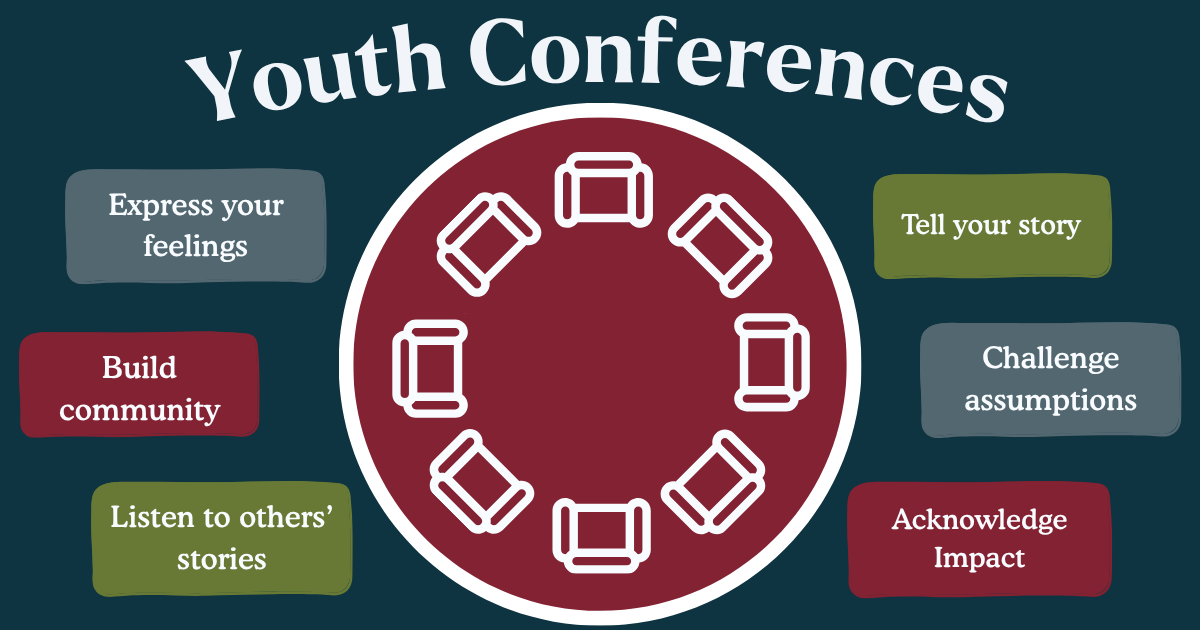
A youth restorative community conference is a facilitated conversation, either face-to-face or virtual, between the person(s) harmed/community, the youth who caused harm, and the guardian/parents of the youth. Persons harmed are people directly impacted by youth’s actions. Community member participants are trained in restorative practices and can speak of the broader impacts and support youth through the process. Participation of the community and/or persons harmed is voluntary. Participation of the referred youth is based upon their willingness and readiness. After taking time to tell the story and conditions which led to an incident, conference participants co-create a restorative agreement to guide the youth in addressing what happened. When the youth complete the agreement, the group comes together again to acknowledge the repair and the positive movement forward of the youth. This process includes four steps:
1) Intake
A phone conversation between the parent/guardian of a person who has caused harm (referred participant) and the Youth Conference Coordinator to determine eligibility and interest in participation.
An in-person or virtual meeting between the Youth Conference Coordinator, the youth who caused harm, and the parent/guardian of the referred youth, to describe the process more fully. This meeting prepares the youth for the conference, and enrolls them in the program.
2) Orientation
3) Community Conference
(a) Discussion of Impact — Together, all parties discuss what happened, what led to the youth’s actions, and who was affected. If any directly harmed person participates, they are welcome to invite supporters. (b) Creating an Agreement – Through consensus, the group creates an agreement for the referred youth to take accountability, repair harm, and move forward in positive ways. The agreement is not a punishment; it is a meaningful and constructive way to make amends. Agreements are unique to each individual, and context and could include elements such as community service, letters, personal development, or other activities.
Each referred youth has up to 5 weeks from the date of the conference to complete the agreement, at which time everyone reconvenes for a closing conference to discuss the outcome of the agreement. If the referred youth successfully completes the agreement, there will be no further interaction with the criminal legal system regarding the incident.
4) Agreement Completion